

Advising Ukraine, Representing Canada?
Does The Parliament of Canada Need Stricter Ethic Rules?

Canadians address their MPs as "Honourable Members." That title should mean something.
Chrystia Freeland's appointment as economic advisor to Ukraine's president suggests she missed that mark on her way out the door. The timeline reveals the problem. On December 16, 2024, Freeland resigned from cabinet as Finance Minister and Deputy Prime Minister. On January 7, 2025, Ukraine's President Zelenskyy announced she would serve as his special advisor on economic issues and sanctions policy. At that moment, Freeland remained a sitting Member of Parliament, collecting her parliamentary salary while advising a foreign government. Whether she has since resigned from the House, or merely announced an intention to do so, remains unclear. The distinction matters: drawing taxpayer salary while serving foreign interests looks bad.
Freeland claims the role is unpaid volunteer work. That makes it worse, not better.
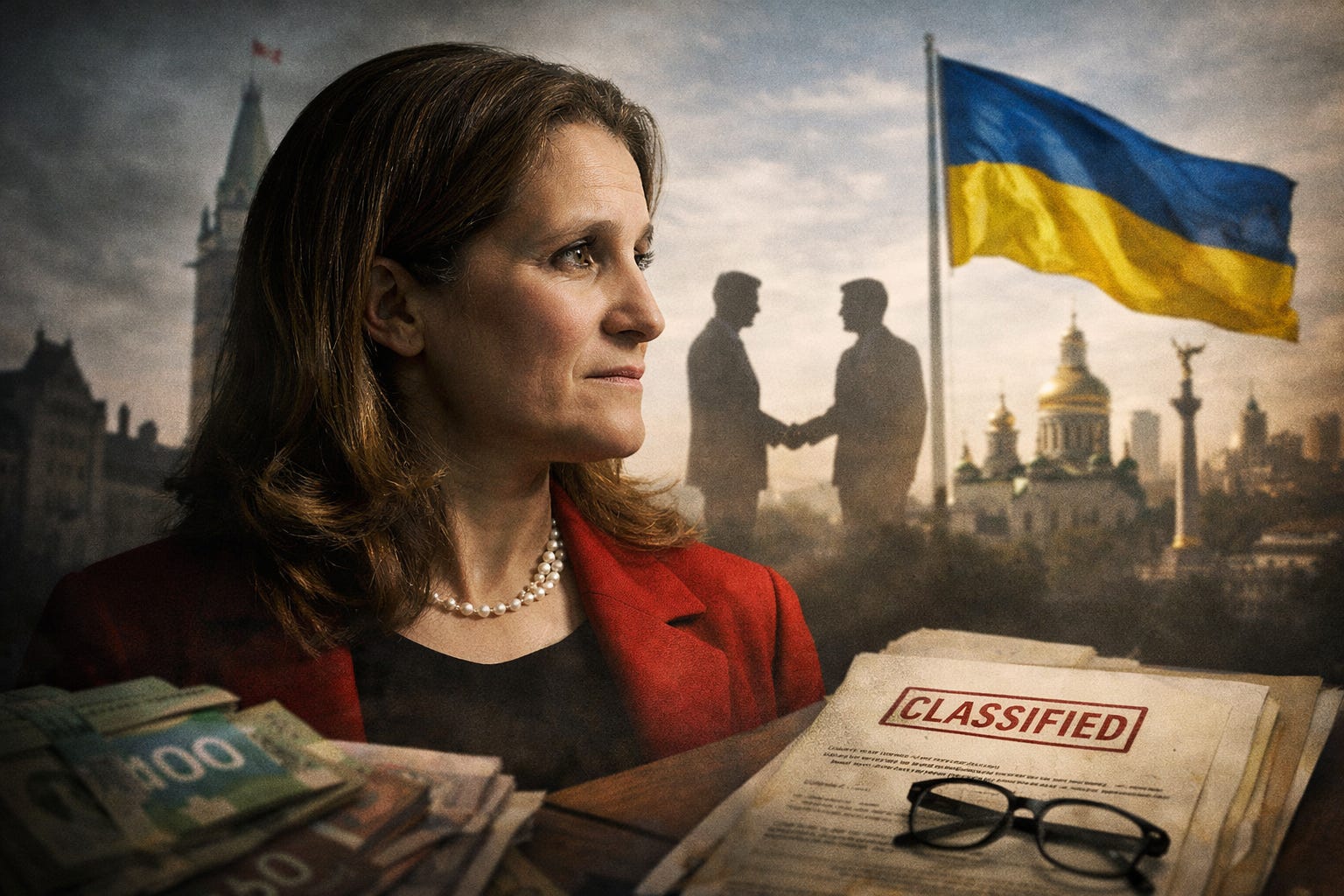
What makes this case peculiar isn't rule breaking. Having left cabinet over a year earlier, Freeland technically violated nothing. The problem is what her actions reveal about judgment, entitlement, and disregard for appearances. The manner in which this unfolded, with Ukraine announcing before Freeland acknowledged it publicly, with her remaining an MP afterward, with "volunteer" offered as if that resolves concerns, suggests someone who doesn't much care what Canadians think.
This matters now more than a decade ago. Canada faces documented foreign interference. Our security agencies warn about influence operations targeting politicians. We need to ask whether our ethics laws protect against conflicts when senior officials move directly from Parliament to foreign government advisory roles.
Let's take a look at the rules. The Conflict of Interest Act establishes two restrictions for former cabinet ministers. They cannot lobby their former department for one year. They cannot join boards of entities they dealt with significantly during their final year. In the strictest sense, this clears Freeland, unless she started her volunteer work before announcement.
The rules target private sector conflicts, assuming the main risk comes from ministers cashing in on corporate connections. Foreign government employment, paid or unpaid, falls into a grey area, to out it mildly. As we have seen from experience, there are no clear prohibition on sitting MPs working for or advising foreign governments.
Freeland's case exposes again this gap that is personal and institutional. As Deputy Prime Minister, Foreign Affairs Minister and Finance Minister, she participated in cabinet discussions about Ukraine policy, sanctions against Russia, and military aid. She accessed classified intelligence about the war. Now she advises Ukraine's government while her personal friend and godfather to one of her children, Mark Carney, serves as the Prime Minister of Canada.
Whether advising Ukraine involves lobbying Canadian government remains a question for the Conflict of Interest Commissioner. But broader questions about foreign influence extend beyond what our current framework addresses.
The “volunteer” reference doesn’t cut it. Few will believe a former Finance Minister provides sophisticated sanctions policy advice purely from altruism. Even unpaid, the position creates future value through Ukrainian government goodwill, international network access, and reputation building as a global statesperson.
Conflicts exist regardless of compensation. Freeland possesses insider cabinet knowledge about Ukraine policy, sanctions architecture, and classified intelligence. She maintains relationships with serving officials, particularly the Prime Minister. Ukraine benefits from her expertise and connections whether they pay or not. Her advice to Ukraine could influence Canadian policy decisions.
The volunteer claim raises questions rather than answering them. Can she afford to donate high-level expertise? Does compensation come in non-monetary forms requiring no disclosure? What political capital is she building?
Canadians will reasonably ask: Why does a sitting MP volunteer to advise a foreign government while Canada decides military aid, sanctions, and reconstruction funding for that country?
For several years, Canada has been living under a dark cloud if foreign interference, especially Parliament. The 2023 foreign interference inquiry documented Chinese government attempts to influence elections and intimidate diaspora communities. CSIS describes sophisticated operations by multiple states to cultivate political relationships, funnel campaign money, and shape policy.
Former ministers possess what foreign intelligence services value most: knowledge of how Canadian decisions get made, relationships with serving officials, and insights into closed-door debates. The question isn't whether Freeland would intentionally compromise Canadian interests. It's whether rules should rely on individual honour when structural safeguards could reduce risk.
In the Westminster tradition, appearences matters. Even absent actual conflict, optics matter for public trust. A former Finance Minister advising a foreign government while maintaining close ties to the serving Prime Minister creates reasonable questions about influence.
This isn't necessarily about Freeland's integrity. Democratic institutions require actual propriety and its appearance. When citizens suspect personal connections or post-government prospects might shape ministerial decisions, confidence erodes regardless of whether suspicions prove correct.
Westminster tradition holds that ministers owe undivided loyalty to Crown and Parliament during service. Does that obligation extend beyond resignation? Not forever, but for a reasonable cooling period separating government service from foreign employment seems defensible.
Honour demands quaint things. Following rules differs from upholding honour expected of those serving at democracy's highest levels. Freeland's actions may satisfy statutory minimums while falling short of standards Canadians expect from a former Deputy Prime Minister, Finance Minister, and Foreign Affairs Minister.
Someone who accessed cabinet confidences and classified intelligence, who shaped national policy on war and peace, carries obligations beyond statute. Drawing parliamentary salary while advising foreign governments, compensated or not, suggests failure to grasp those obligations.
The rollout manner compounds this. Ukraine announced first. Freeland continued as MP. "Volunteer status" got offered as resolution. This suggests entitlement rather than service.
Senior officials treating positions as stepping stones to international influence, moving seamlessly to foreign advisory roles without pause or reflection on appearances, damage public confidence in government integrity. The traditional concept of honour in public service meant recognizing that the highest responsibilities carry continuing obligations after leaving office. Some opportunities, however attractive or well intentioned, should be declined because accepting them creates impropriety's appearance, damaging institutions larger than any individual.
Canada's approach looks permissive compared to a few peer democracies I checked out:
Australia prohibits former ministers from lobbying government entities for 18 months, with additional foreign principal restrictions applying regardless of compensation.
United Kingdom reviews all post-government employment through its Advisory Committee on Business Appointments, which imposes conditions, waiting periods, or bans based on conflicts and national security.
France bars senior officials from foreign government work for three years without independent commission approval evaluating former responsibilities against proposed roles.
Germany requires ministers to obtain approval before accepting foreign entity positions, with independent review lasting three years based on national interest.
South Korea imposes two-year bans on foreign government work, paid or unpaid, with criminal penalties for violations.
Israel requires three-year waits before foreign government employment, with exceptions needing special committee approval including intelligence officials assessing security implications.
These countries recognize conflicts extending beyond corporate lobbying. They address foreign employment specifically because they understand national security implications and the importance of maintaining confidence in former officials' integrity.
On foreign interference issues. Ottawa still lives under the omertà of the last Parliament. Notably absent is any indication Canada's ethics mechanisms engage with questions Freeland's appointment raises. The Conflict of Interest Commissioner has made no public statement about review. No investigation has been announced. The silence suggests current rules don't capture this conflict type, or enforcement depends on complaints that haven't materialized.
This institutional quiet reveals that Canada's framework may lack both rules addressing foreign employment by sitting MPs and the capacity or mandate to examine such arrangements proactively.
The need for reform is serious. Canada should amend the Conflict of Interest Act addressing three gaps:
First, establish a three-year waiting period before former cabinet ministers accept foreign government employment or advisory roles, applying regardless of lobbying involvement or compensation. Influence flows through informal channels and personal relationships.
Second, require former ministers to disclose foreign government advisory roles to the Conflict of Interest Commissioner with public reporting, whether compensation is involved or not. Transparency allows citizens and journalists to assess conflicts.
Third, explicitly prohibit former ministers from using classified information or insider knowledge to benefit foreign principals, with enforcement mechanisms beyond toothless advisory opinions.
Conversely, overly broad cooling periods could discourage qualified people from politics if they face years of employment restrictions. Ukraine is a democratic ally facing Russian aggression, not a hostile power. Should advisory roles to allies be treated like authoritarian regime employment?
Enforcement poses practical questions. More rules don't guarantee compliance if the Commissioner lacks resources or powers. Strengthening existing institutions might work better than expanding restrictions.
There has to be some balance. Canada's ethics framework must address structural vulnerabilities when former senior officials, while still MPs, move immediately to foreign government employment.
In an era of documented interference, the framework looks inadequate. Rules were written when corporate lobbying seemed the main concern and foreign relationships operated through official channels. Today's reality involves sophisticated influence operations, personal relationship cultivation, and blurred official-unofficial lines.
Balance lies between status quo and lifetime bans. Reasonable cooling periods, transparency requirements, and clear prohibitions on insider information misuse address obvious risks without unreasonably restricting career options.
Freeland accepting this role while serving as MP, having it announced by a foreign government before she discussed it publicly, and claiming volunteer status reveals serious framework gaps. More fundamentally, it reveals someone who missed what "Honourable Member" should mean.
We call MPs honourable because we expect honour. Not just rule compliance, but recognizing that public service at the highest levels carries obligations extending beyond office. Canadians have lost confidence in their institutions. Nursing that confidence back to health requires Honourable Members being honourable. A few tighter rules might help people like Chrystia Freeland.
Well done, Sir!
I respectfully disagree with your correspondent, Edward Hollett. Yes, you used a lot of words and, yes, you did not specifically point to a rule violation that placed the (dis)Honorable Chrystia offside.
However, however ....
You did identify the issue of honor which, to my mind, she violated. You identified factual worries and actual issues leading to conflict, even if not identified in Canada's pitiful rules. Further, you identified what other countries do in this particular area which, again, reflects badly on Canada's rules.
So, a thorough and thoughtful analysis, Sir.
That's an awful lot of words to not indicate how Freeland would actually be in a conflict of interest.
Your mention lobbying Canadian government officials but don;t show that she has, plans to, or would.